Showing posts with label ham radio. Show all posts

Wednesday, March 21, 2012

Software Defined Radio Receiver: DC to 1,700 MHz!


Modern electronics is really capable of being tiny. If you look at the projects outlined here, equipment that used to be mounted in 19"-wide metal rack panels for the military when I was in the Navy in the mid-1960s is now able to fit on a thumb-drive-sized "dongle" that plugs into your USB computer port on almost any modern computer! And the abilities of this equipment to do things the older stuff couldn't do are near boundless. When I used the specialized receivers in small communications vans or containers similar to today's shipping containers for overseas commerce, I never expected this degree of reduction in size.
Here are some links to look at this equipment, if you are interested:
A UK project for SDR:
About page:
And an option for HF:

It may be old news to you, but I thought I'd share this.

Monday, July 11, 2011

Buggin' the 21st Century


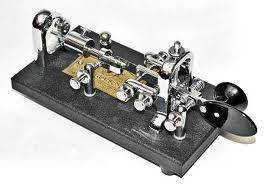
A friend sent a link to this blog post today. It was written by a fellow who uses one of my favorite tools: A semi-automatic key or bug. That is what the manufacturer of them, Vibroplex, calls these wonders of very old technology. I won't stand in the way of the nicely written blog post. Enjoy!

Comments welcomed.
Link

Monday, August 17, 2009

HAM: Spacesuit satellite answers YOUR call


Ham radio enthusiasts will go to just about any length to extend their reach into space at a little-or-no-cost boost out there. The latest thing is to have a satellite that grabs and repeats ham radio transmissions INSIDE discarded spacesuits tossed out from the International Space Station to eventually burn up in Earth's atmosphere. You can see an article on such satellites HERE. The next one is scheduled during 2010.

If you are interested in becoming a ham operator, information is available HERE. This month, I'm celebrating 49 years of being licensed in the service, so am offering a hand to YOU to join in the fun. It is a never-ending kaleidoscope of directions to go and think and do, helping others and learning new things. There are always folks to lend a hand in ham endeavors, far and near.

Comments always welcome.

Friday, August 14, 2009

Morse Code practice


At a garage sale across the street today, I picked up a Midland model 25-109 Morse Code practice oscillator (not the one in the photo). It wasn't the pristine device I first imagined from its exterior. The wife RATTLED it loudly and asked if it were supposed to sound like that. I told her it wasn't and hurried off to run some errands. While we were at the grocery, I took the opportunity to whip out my Swiss Army knife and see what made it rattle.

Ouch! As I supposed it was, the previous owner had left the two C cells in their holder to rattle around inside the case. It was the most crud and corruption I'd ever seen come out of two cells, equaling about three tablespoons of corroded mess to be dumped. Most of the aluminum holder had dissolved away at one end, leaving the solder lug to dangle loosely. The cells had holes in them and had gotten rid of any gel or liquid they could during their long years of being abandoned.

But, the single transistor, two potentiometers, audio transformer, speaker, slide switch, pilot lamp, terminal strips, and 3.5 mm earphone jack are all in pretty good shape for having been exposed to such corrosive mess for many years. I may have to replace the two-screw-terminal key connection, if the screws are in too bad a shape to allow future connections. Otherwise, I think liberal application of water and 91% alcohol with Q-Tips will fix it right up. And I will need some new battery holder or other to replace the old one.

Morse Code is well worth your while to learn. You never know when a post-apocalyptic world will require you to communicate in that fashion!

Comments always welcome.

Sunday, June 21, 2009

The Case of the Missing Sunspots


Ham radio operators and shortwave listeners have been pretty discouraged at the lack of our sun to build an appropriate number of sunspots. To the average person, this seems like either a tempest in a teapot or angels dancing on the head of a pin. But to folk who depend on the ionosphere of our planet to reflect radio waves, it is important. The number and size of sunspots on the part of the sun facing the Earth is closely tied to energy coming from the sun to energize the ionosphere's reflection regions. Here is a good discussion from NASA of why those sunspots have not been created and a good story why the folks waiting for them should not lose hope.

Comments welcome.

Saturday, May 2, 2009

Bending plastic for fun and use


I ran across this interesting how-to video today. Having a pile of scrap Lexan, my ears perked up. Making covers for keyers and other projects interests me, as well as short stands to support a ham radio transceiver while leaving room for a Morse paddle or notepad beneath it. Now, I just have to find an old hair dryer and some plaster of Paris to try it out.
http://blog.makezine.com/archive/2009/05/bending_plexiglas.html

More technical information on the material can be found at
http://en.wikipedia.org/wiki/Acrylic_glass
http://en.wikipedia.org/wiki/Lexan

Sunday, December 7, 2008

Pages of radio history

An Austin ham/electrical engineer friend sent along this link tonight for the 1939 Radio Shack catalog. At first thought, it might seem that it would be boring. But, as you turn the pages, you get to see what was new and exciting back then in a way that a single photograph of a workbench or and ham operator's equipment would not show you.

The catalog lists ham radio equipment, as well as laboratory test equipment. The components and how they are named and specified in the text tells much about that era's equipment. You learn the popular component voltage ratings, resistor wattages, radio chassis sizes, and the tools it took to work with the components and build your own equipment.

Viewing this catalog is more than just turning pages without the dust and musty smell: these are the pages of radio history.