Showing posts with label shortwave radio. Show all posts

Wednesday, March 21, 2012

Software Defined Radio Receiver: DC to 1,700 MHz!


Modern electronics is really capable of being tiny. If you look at the projects outlined here, equipment that used to be mounted in 19"-wide metal rack panels for the military when I was in the Navy in the mid-1960s is now able to fit on a thumb-drive-sized "dongle" that plugs into your USB computer port on almost any modern computer! And the abilities of this equipment to do things the older stuff couldn't do are near boundless. When I used the specialized receivers in small communications vans or containers similar to today's shipping containers for overseas commerce, I never expected this degree of reduction in size.
Here are some links to look at this equipment, if you are interested:
A UK project for SDR:
About page:
And an option for HF:

It may be old news to you, but I thought I'd share this.

Monday, August 31, 2009

Podcasts and listening in today's world


I don't know about you, but it seems to be harder and harder for me to be somewhere I can listen or watch something at an appointed time. Maybe I'm alone in that regard, but I don't think so.

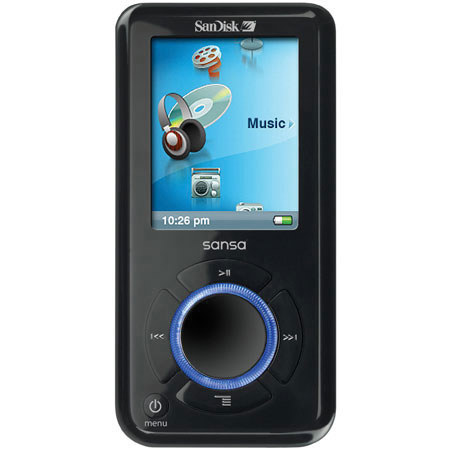
Podcasts of favorite shows are saving my mind, allowing me to catch the shows any time I want to. I now hang an FM transmitter in my Prius' cigar lighter jack, wrap the external audio cord over the rear-view mirror (it is used as the antenna to communicate with the vehicle FM radio), and slap the plug into my Sansa 4 Gb e260 earphone jack. When I turn up the sound, it will let me travel for miles and miles that I have to go to get anywhere significant in Texas without getting sleepy or succumbing to highway hypnosis. Before I travel, I fill up a 2 Gb micro-SD card with podcasts.

While I sit here at my computer, I keep from getting in the way of other things I might want to use the sound card for by plugging the e260 into an inMotion player and listening to those same podcasts.

Some programs I like to catch are these:
Mountain Stage
http://www.mountainstage.org/mtnstagepodcast.aspx

Woodsongs Old Time Radio Hour
[I just wish the emcee wouldn't talk so darned much.]
http://www.woodsongs.com/showlist.asp

WHYY's Fresh Air
[Again, I just never seem to be in front of a radio at the right time.]
http://www.npr.org/templates/archives/archive.php?thingId=13

NPR All Songs Considered
http://www.npr.org/templates/archives/archive.php?thingId=37&date=07-27-2009

NPR Marian McPartland's Piano Jazz
http://www.npr.org/templates/archives/archive.php?thingId=24&date=08-07-2009

And, since I'm an inveterate short-wave radio listener, I like things like
Radio Australia podcasts
[you can choose from the large selection of programs at]
http://www.abc.net.au/rn/podcast/

BBC podcasts
[again, a huge choice at]
http://www.bbc.co.uk/podcasts/

Deutsche Welle
[a smaller set in English from the main German broadcaster at]
http://www.dw-world.de/dw/article/0,2144,1719252,00.html

As you can see from this small slice of the world's offerings, you can find enough audio to entertain you, even if you were a NYC cabbie doing 20 hours shifts for the rest of your (much shortened) life! This piece doesn't mention how to get these automatically sent to your machine. If there's interest, I can do another piece on that.

Comments welcomed.

Sunday, June 21, 2009

The Case of the Missing Sunspots


Ham radio operators and shortwave listeners have been pretty discouraged at the lack of our sun to build an appropriate number of sunspots. To the average person, this seems like either a tempest in a teapot or angels dancing on the head of a pin. But to folk who depend on the ionosphere of our planet to reflect radio waves, it is important. The number and size of sunspots on the part of the sun facing the Earth is closely tied to energy coming from the sun to energize the ionosphere's reflection regions. Here is a good discussion from NASA of why those sunspots have not been created and a good story why the folks waiting for them should not lose hope.

Comments welcome.

Thursday, January 29, 2009

Regional sources of news: Australia


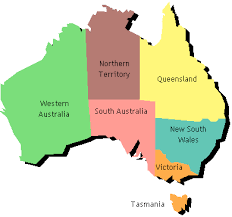
It is pretty handy having English as a native language. There are countries around the world that share the same tongue...Australia, for instance. Here are some podcasts from their national broadcasting corporation: a general look at the possibilities, religion and those on science. I spent many decades listening to Radio Australia and its coverage of their nation and Asia in news and culture. That broadcast outlet's podcasts are generally mentioned here, with my own particular focus on past radio broadcast coverage evident in my choices of
Breakfast Club Web page/podcast:

(Duration: 20 min, filesize: 9 MB MB , Updated daily)

The Breakfast Club is Radio Australia's window on what's happening in Asia. From Monday to Friday Phil Kafcaloudes and Adelaine Ng present a selection of their best interviews and segments.


Asia Pacific Web page/podcast:

(Duration: 25 min, filesize: 13 MB , Updated daily)

Keeping you up to date with what's happening in our region, Asia Pacific brings you the very latest coverage and analysis on what's making headlines throughout Asia and the South Pacific.

Innovations Web page/podcast:

(Duration: 27 min, filesize: 12 MB , Updated weekly)

A showcase of Australian design, discoveries, invention, engineering and research skills from Radio Australia. Updated every Tuesday.

If that doesn't sat your thirst for knowledge of Australia or Asia in general, comment and let's discuss what you might be looking for.

Saturday, December 6, 2008

Shortwave link to G_d?


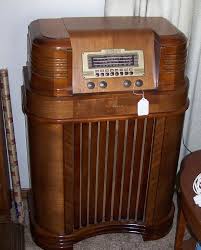
My wife is a United Methodist pastor. Today we went out in the country to have lunch with some folks who have visited our church many times (and who speak fluent Spanish). In the midst of our lunch, I happened to see an old, console radio of the type that was in many living rooms in the 1930's. I asked if it worked and the lady of the house said it did and we could try it out after lunch.

Being an engineer, I had a short mental lapse from the after-lunch conversation about what this and that in the Bible REALLY means. I thought of the radio. I got up and the lady of the house turned it on by plugging it in. After some warm-up time for the tubes, I tuned around and found a couple of AM radio stations. There were only 4 control knobs, so the band switch was easy to locate. I switched to shortwave. No joy, even after tuning all across the band (3-18 MHz, as most of that era radio sets did). I asked her for an extension cord. She found one of about 12 feet length. I hooked it onto the wire I found dangling in the back of the set. The first shortwave station I tuned to was about 15 MHz and was in fluent Spanish. It was a religious broadcast. The folks we were visiting were amazed, since with the 3-foot antenna inside the case, they had not received anything. They may now have another source for receiving broadcasts that had been sitting inside their home for years.

Sunday, November 23, 2008

Cold War...cold shoulder


I was catching up this afternoon with the news on the ARRL (American Radio Relay League) site, when I found an article that floored my sensibilities. This article dealt with a young man who listened to other countries' shortwave broadcasts back in the period of time we call the "Cold War" era. A large percentage of shortwave listeners collected verification cards to show their friends which of the stations they had actually snagged on the receivers they so dearly loved. To get one of these cards required (in the era before email and the Internet) the listener to send a letter to the station, requesting the card and giving details of the signal strength of the station received, their receiver and antenna setup, and details of the program(s) listened to, along with the date and time the station was received.

The teen received a card from (among others) "Radio Habana" in Cuba. As the article explains, his "mom -- who was the local draft board lady -- got a call from the FBI and Greg had to explain why he was 'in contact' with Radio Habana. When he explained that he was just a shortwave listener, the FBI told Greg that if he never contacted Radio Habana again, his mother could keep her job!"

That threat to the livelihood of the mother of a teen radio listener and hobbyist...a hobbyist who was doing nothing wrong, and who was pursuing an innocent hobby, seems to me very shocking. But, at the same time, my own veneer of hardness continues toward my government's frequently misplaced and probably illegal actions towards its own citizens through the decades of my life.

How else can you view something reported like this?